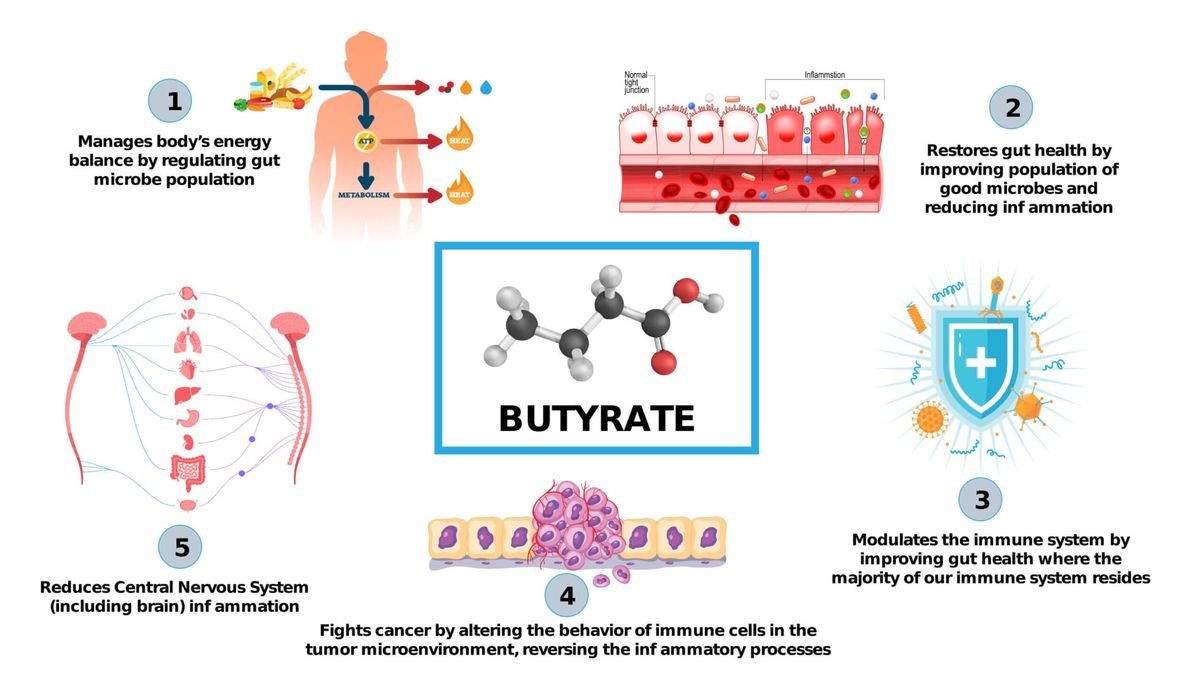
Introduction: Your Gut Is Running on Empty
If you’re eating “healthy” but still dealing with bloating, irregular digestion, low energy, or unexplained inflammation, the issue may not be calories, carbs, or protein.
It could be butyrate deficiency.
Butyrate is one of the most important molecules your gut produces — yet modern diets and lifestyles are quietly wiping it out. When butyrate levels fall, digestion weakens, inflammation rises, and overall gut resilience collapses.
Let’s break down what butyrate is, why it matters, and how to restore it naturally.
What Is Butyrate?
Butyrate is a short-chain fatty acid (SCFA) produced in the colon when beneficial gut bacteria ferment dietary fibre.
You don’t consume butyrate directly through food.
Instead, your gut bacteria manufacture it — provided they are healthy and well-fed.
Think of butyrate as petrol for your gut lining. Without it, the digestive system starts malfunctioning at a cellular level.
Why Butyrate Is Critical for Gut Health
Low butyrate doesn’t cause one dramatic symptom.
It causes many small problems that slowly add up.
1. Fuels the Gut Lining
Cells lining your colon rely on butyrate as their primary energy source. Low levels weaken this protective barrier.
2. Prevents “Leaky Gut”
Butyrate strengthens tight junctions in the gut wall. Without it, toxins and undigested particles can leak into the bloodstream, triggering inflammation.
3. Reduces Chronic Inflammation
Butyrate has anti-inflammatory effects that regulate immune responses inside the gut and beyond.
4. Supports Regular Digestion
Healthy butyrate levels help maintain normal bowel movements and reduce bloating, gas, and discomfort.
5. Influences Brain and Mood
Through the gut–brain axis, low butyrate levels are linked to fatigue, low mood, anxiety, and brain fog.
In short: butyrate is foundational, not optional.
Why Low Butyrate Is So Common Today
1. Fibre-Deficient Diets
Ultra-processed foods starve gut bacteria. No fibre means no fermentation — and no butyrate.
2. Excessive Antibiotic & Painkiller Use
Antibiotics wipe out beneficial microbes. NSAIDs damage the gut lining. Together, they dramatically reduce butyrate production.
3. Irregular Eating Patterns
Late-night meals, constant snacking, and erratic fasting disrupt gut bacterial rhythms.
4. Chronic Stress and Poor Sleep
Stress hormones and sleep deprivation alter the gut microbiome, reducing butyrate-producing bacteria.
Ironically, many people eating “clean” still lack the specific fibres their gut needs.
Symptoms of Low Butyrate Levels
Low butyrate often shows up as vague, persistent issues:
- Bloating or excess gas
- Constipation or alternating bowel habits
- Food intolerances
- Low energy despite adequate food intake
- Brain fog or low mood
- Frequent inflammation-related problems
Routine blood tests won’t detect this. Your symptoms usually tell the story first.
How to Increase Butyrate Naturally
Restoring butyrate isn’t about supplements first — it’s about rebuilding the gut ecosystem.
Eat More Fermentable Fibre
Focus on fibres your gut bacteria can actually use:
- Millets, oats, barley
- Lentils, chickpeas, beans
- Onions, garlic, leeks
- Vegetables and whole fruits
- Nuts and seeds
Use Resistant Starch (Highly Effective)
Cook → cool → consume:
- Cooled rice or potatoes
- Overnight oats
- Cooked and cooled lentils
Resistant starch is one of the most powerful stimulators of butyrate production.
Include Fermented Foods
Curd, kefir, and fermented vegetables support microbial balance, indirectly boosting butyrate production.
Are Butyrate Supplements Useful?
Butyrate supplements may help in specific cases — especially in people with severe gut inflammation or post-antibiotic damage.
However:
- They do not rebuild gut bacteria
- They are not a long-term solution
Think of supplements as support, not replacement.
The Bigger Picture: This Is a Lifestyle Signal
Low butyrate isn’t a disease.
It’s feedback.
It signals:
- Lack of dietary fibre
- Reduced microbial diversity
- Chronic stress on the digestive system
Fixing it requires consistency, not quick fixes.
Final Thoughts: Feed the Gut, Fix the System
Your gut doesn’t need detox teas or extreme diets.
It needs:
- Fibre
- Regular meals
- Microbial diversity
- Time
When you feed your gut bacteria properly, they produce butyrate — and your entire system becomes more resilient.
Sometimes the most advanced health solution is also the oldest one:
Eat real food, consistently.
Leave a Reply