For centuries, cocoa has been called “food of the gods.” Turns out, that ancient intuition may have been onto something.
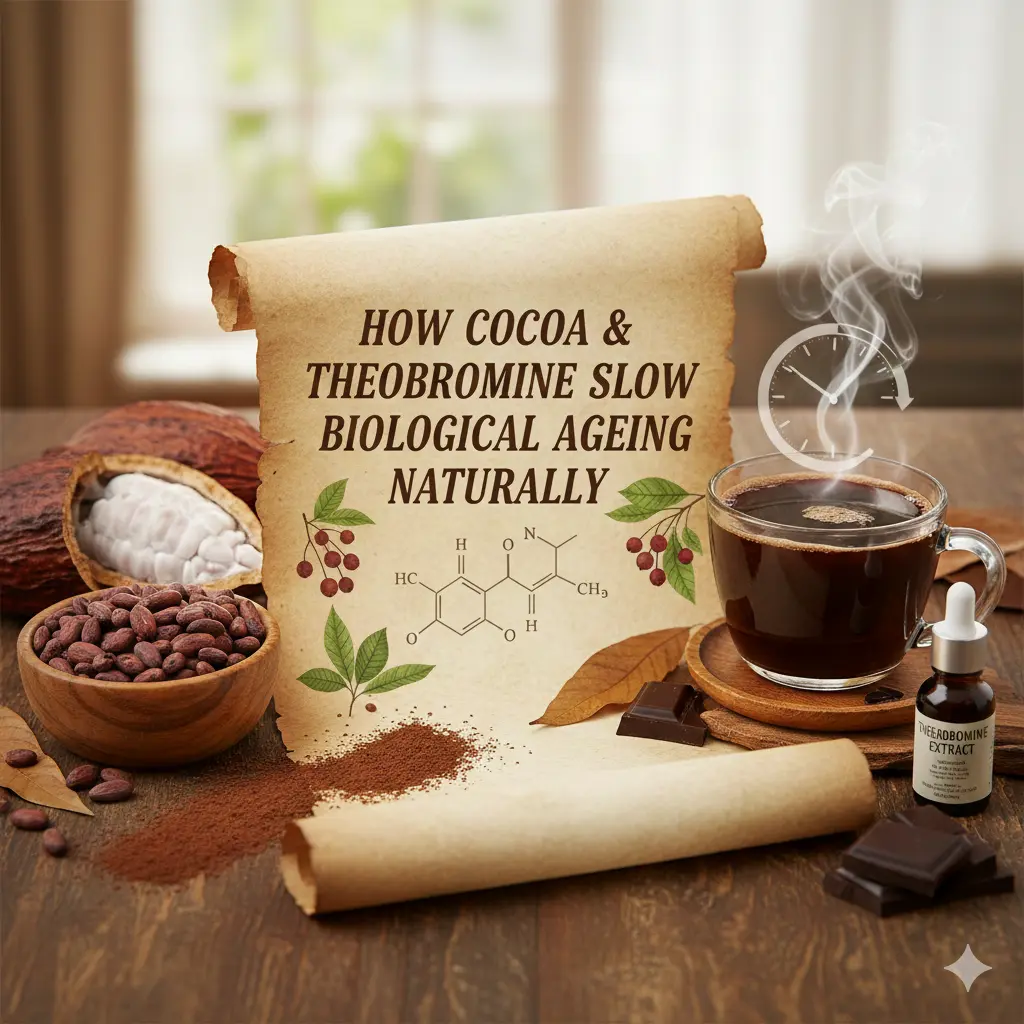
A growing body of research now suggests that theobromine, a natural compound found abundantly in cocoa, could play a role in slowing biological ageing and improving overall metabolic and cardiovascular health. A recent study from UK scientists adds real scientific weight to what was once just folklore.
Let’s break down what the science actually says—and what it doesn’t.
The Science Behind Cocoa and Ageing
A study published in the journal Aging by researchers from King’s College London examined whether theobromine levels in the blood were linked to biological ageing.
Study design at a glance:
- Participants:
- 509 individuals from the UK (Twins cohort)
- 1,160 individuals from Germany (KORA cohort)
- Average age: ~60 years
- Method: Blood-based biological ageing markers using DNA methylation patterns
DNA methylation acts like “bookmarks” on your DNA, changing as you age. These markers help scientists estimate biological age, which can differ from chronological age.
Key finding:
People with higher theobromine levels in their blood had a lower biological age than their actual age.
That’s a big deal.
What Is Theobromine?
Theobromine is the primary alkaloid in cocoa, responsible for its slightly bitter taste. While it’s also found in tea and coffee, cocoa contains far higher concentrations.
Unlike caffeine, theobromine is:
- A milder stimulant
- Longer-lasting
- Less likely to cause jitters or crashes
Benefits of Theobromine Beyond Biological Age
The study didn’t just stop at ageing markers. Theobromine is linked with multiple health benefits:
🧠 Brain & Cognitive Health
- Enhances cognitive function
- Reduces age-related cognitive decline
- May help protect against neurodegeneration
🔥 Metabolism & Inflammation
- Acts as an antioxidant
- Has anti-inflammatory properties
- Supports weight loss by improving lipid metabolism
❤️ Heart & Blood Vessels
- Widens blood vessels
- Acts as a mild heart stimulant
- Helps lower blood pressure
🧂 Kidney Health
- Prevents kidney stones by stopping uric acid crystallisation
- Promotes diuresis (healthy urine production)
This isn’t “eat chocolate, live forever” science. It’s metabolic signalling, not magic.
Which Chocolates Contain the Most Theobromine?
Measured per 100 grams:
| Source | Theobromine (mg) |
|---|---|
| Cocoa powder | 2634 mg |
| Unsweetened baking chocolate | 1297 mg |
| Dark chocolate (70–85% cocoa) | 802 mg |
| Dark chocolate (60–69% cocoa) | 632 mg |
| Dark chocolate (45–59% cocoa) | 493 mg |
| Hot cocoa | 68 mg |
Translation: Milk chocolate barely moves the needle. Cocoa powder and high-percentage dark chocolate do the real work.
Is Theobromine Safe?
Yes.
- 300–600 mg per day is considered safe
- It’s virtually impossible for humans to consume toxic amounts from commercial chocolate
(Your dog, however, is a different story—but that’s another article.)
What This Research Really Means
As the study author Jordana Bell from King’s College London explains, this doesn’t mean people should binge on dark chocolate.
Instead, it suggests that everyday foods contain compounds that may influence gene activity, ageing, and long-term health in ways we’re only beginning to understand.
The real takeaway?
Ageing isn’t just about years lived—it’s about how your cells age.
And cocoa might quietly be helping.
Leave a Reply