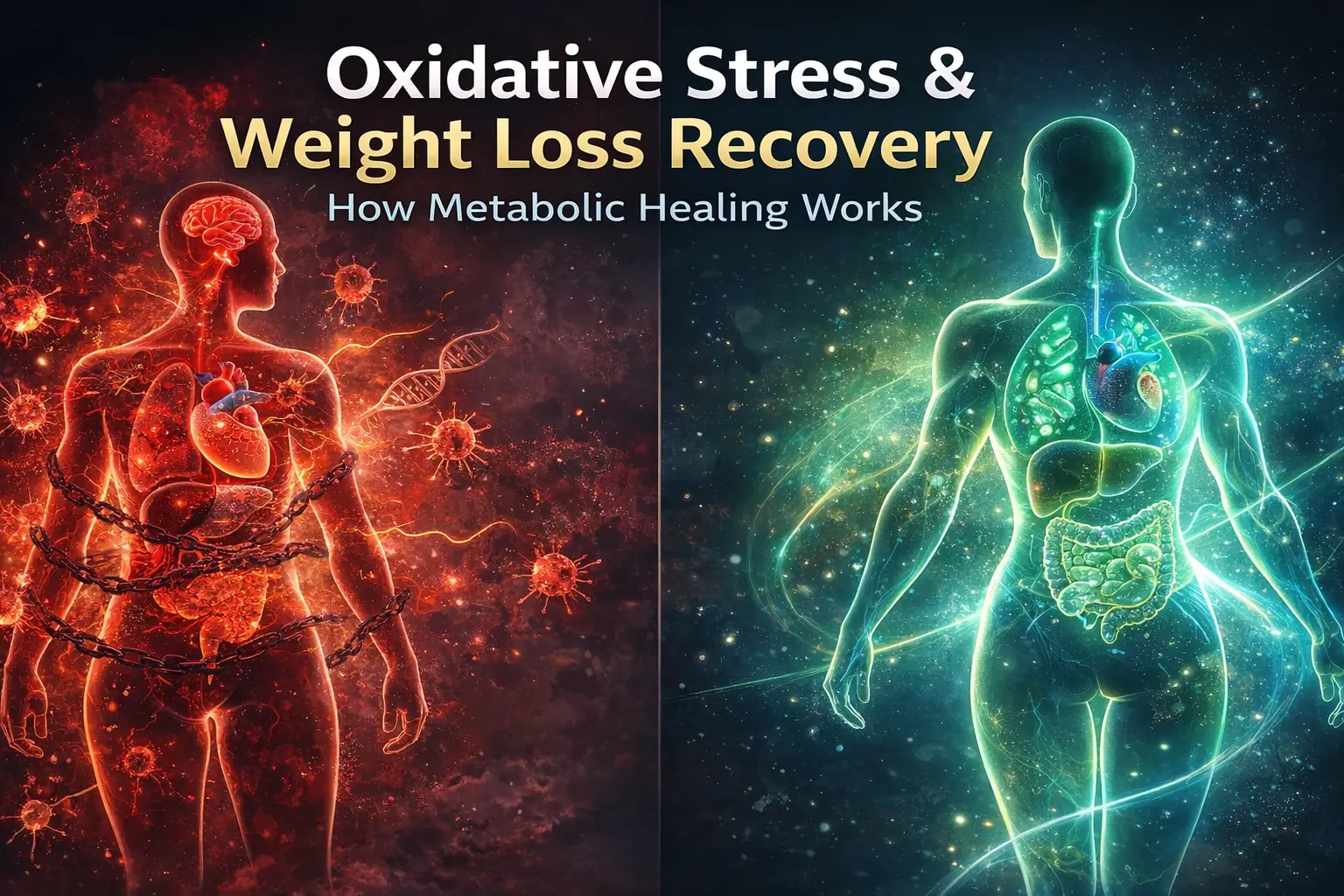
Most people think chronic diseases are caused by bad genes, aging, or “high numbers” on blood reports.
But underneath almost every modern metabolic condition—
diabetes, thyroid issues, PCOS, fatty liver, heart disease—
there’s a common invisible driver:
👉 Oxidative stress
It doesn’t announce itself loudly.
It corrodes the system slowly—cell by cell, organ by organ.
Let’s break down what oxidative stress really is, how it damages different organs, and why healthy weight loss and metabolic repair reverse far more than people realize.
What Is Oxidative Stress (In Simple Terms)?
Your body constantly produces energy using oxygen.
This process creates reactive oxygen species (ROS)—commonly called free radicals.
In small amounts, ROS are normal and even useful.
Problems begin when:
- ROS production becomes excessive
- Antioxidant defenses can’t keep up
- Mitochondria (your energy factories) become inefficient
This imbalance is called oxidative stress.
Think of it like this:
- A little heat keeps an engine running
- Constant overheating destroys the engine
That’s oxidative stress.
🧠 Brain: When Signals Slow Down
The brain is one of the most vulnerable organs to oxidative stress because:
- It consumes massive amounts of oxygen
- It’s rich in fragile fats
- Neurons regenerate very poorly
What oxidative stress does to the brain:
- Damages neuron membranes
- Disrupts neurotransmitter signaling
- Slows electrical communication
Common symptoms:
- Brain fog
- Poor focus
- Anxiety
- Early cognitive aging
It’s like rusted electrical wiring—signals still move, but slower and weaker.
❤️ Heart & Blood Vessels: Cholesterol Isn’t the Real Villain
Contrary to popular belief, cholesterol itself isn’t the enemy.
Here’s the real chain reaction:
- Oxidative stress damages blood vessel lining
- LDL cholesterol enters damaged areas
- LDL becomes oxidized
- Inflammation follows
- Plaque forms
So the problem isn’t cholesterol—it’s oxidized cholesterol.
Results:
- High blood pressure
- Stiff arteries
- Plaque buildup
- Increased heart disease risk
This explains why some people with “normal cholesterol” still develop heart disease.
🩸 Pancreas & Diabetes: Sugar Is Fuel for Oxidative Fire
Glucose metabolism produces far more ROS than fat metabolism.
Chronic high sugar intake leads to:
- Excess free radical production
- Pancreatic beta-cell exhaustion
- Insulin resistance
- Mitochondrial damage
Over time:
- Insulin becomes less effective
- The pancreas works harder
- Blood sugar rises further
That’s why diabetes isn’t just a “high sugar” condition—it’s a high oxidative stress disease.
Sugar is like petrol on fire:
More sugar → more oxidative damage.
🦋 Thyroid: A Gland Already Living on the Edge
The thyroid naturally produces ROS during hormone synthesis.
It already operates near its oxidative limit.
Add chronic inflammation and oxidative stress, and:
- Thyroid tissue gets damaged
- T4 → T3 conversion drops
- Fatigue and weight gain appear
This is why many thyroid patients:
- Have “normal” lab values
- Still feel exhausted, foggy, and stuck
Often, the issue isn’t hormone deficiency—it’s inflammation and oxidative overload.
🌸 PCOD / PCOS: A Metabolic Disorder, Not Just Hormones
PCOS isn’t just a reproductive condition—it’s deeply metabolic.
Core drivers:
- Insulin resistance
- Chronic inflammation
- Oxidative stress
Oxidative damage disrupts:
- Ovarian signaling
- Hormonal balance
- Egg maturation
Resulting in:
- Irregular cycles
- Infertility issues
- Weight gain
- Hormonal imbalance
This is why improving insulin sensitivity often improves PCOS—even without aggressive calorie cutting.
🫀 Liver (Fatty Liver): An Alarm Signal, Not Fat Storage
The liver is your body’s detox and metabolic control center.
Under oxidative stress:
- Fat becomes inflamed
- Mitochondria malfunction
- Detox pathways slow
Fatty liver is not passive fat storage.
It’s a warning sign:
“Metabolic stress is overwhelming the system.”
That’s why fatty liver is strongly linked to diabetes, heart disease, and insulin resistance.
⚠️ What Increases Oxidative Stress?
You don’t need to be overweight to suffer from oxidative damage.
Key contributors:
- Poor sleep
- Chronic stress
- Air pollution & smoking
- Alcohol
- Processed food
- Sedentary lifestyle
You can look “healthy” on the outside and still be metabolically sick inside.
🔁 What Happens When You Lose Weight the RIGHT Way?
Healthy, sustainable weight loss does more than shrink fat cells.
It:
- Improves insulin sensitivity
- Reduces inflammation
- Lowers free radical production
- Repairs mitochondrial function
- Improves fat-burning efficiency
This addresses oxidative stress at its source, not just the symptoms.
🥩 Why Low-Carb / Keto Often Helps
When done properly:
- Less sugar → fewer free radicals
- Fat burning produces cleaner energy
- Ketones reduce inflammation
- Insulin sensitivity improves
- Hormonal balance stabilizes
But honesty matters:
Keto is a tool—not a miracle.
Quality food, proper nutrients, and sustainability matter more than labels.
💊 The Role of Supplements (Support, Not Rescue)
Supplements act like:
- Firefighters
- Repair workers
- Antioxidant shields
They help with:
- Nutrient deficiencies
- Cellular repair
- Faster recovery
But they cannot override poor lifestyle choices.
You can’t out-supplement insulin resistance.
Final Takeaway
Oxidative stress is the common thread behind most chronic metabolic diseases.
- Weight gain is a symptom—not the root cause
- Insulin control matters more than calorie obsession
- Lifestyle fixes the system
- Supplements support the process
True healing happens when:
Food + lifestyle + metabolic repair work together
If you fix metabolism, the body does the rest.
Leave a Reply